
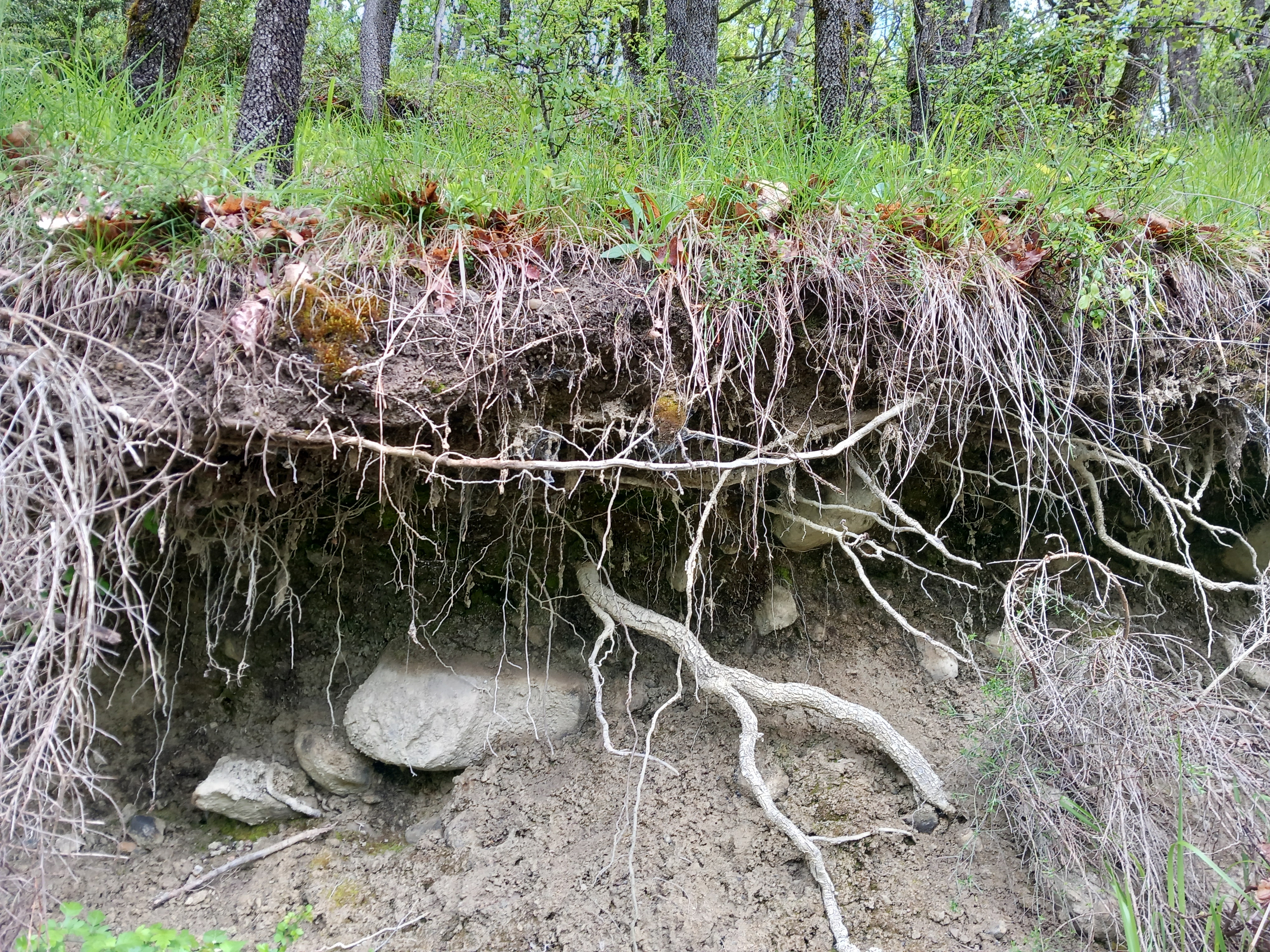
Europe will ‘monitor’ the health of the soil in EU Member States to reduce pollution and improve resilience
The Soil Monitoring and Resilience Directive has already been published and gives three years for compliance
The aim is to mitigate the effects of climate change and biodiversity loss, promote food security and prepare the soil for natural disasters
Both the Pyrenean Soil Alliance (ASPyr) — of which the CTP is a member — and the SOLPYR project, 65% funded by the European Union through the Interreg POCTEFA Programme, are aligned with the spirit of the regulation
To establish a robust and coherent framework for soil monitoring that applies to all soils in the Union in order to reduce soil contamination and improve soil resilience. This is the objective of the new directive on soil monitoring and resilience, which has already been published in the Official Journal of the European Union and gives countries a three-year framework (until December 2028) to adapt to the new requirements, which are common to all 27 Member States. The regulation comes into force on 16 December.
With this framework, and with a view to 2050, the regulation aims to: reduce soil contamination to levels that are no longer considered harmful to human health or the environment; continuously improve soil health in the EU; maintain soils in good health; and prevent and address all aspects of soil degradation.
Ensuring food security
The purpose of this directive is to enable soils to ‘provide multiple ecosystem services on a scale sufficient to meet environmental, social and economic needs’ and to ‘prevent and mitigate the effects of climate change and biodiversity loss’. Reiterating this idea, the European Union aims to increase ‘soil resilience to natural disasters and ensure food security’.
Under the Directive, Member States will establish monitoring systems to assess the physical, chemical and biological status of soils on their territory, based on a common EU methodology. In addition, they shall regularly report to the Commission and the European Environment Agency on the situation regarding soil health, land use and contaminated land, ensuring that comparable data is available across the EU and that coordinated measures can be taken to address soil degradation. Measures will also be taken to monitor emerging contaminants of concern such as perfluoroalkyl and polyfluoroalkyl substances (PFAS), pesticides and microplastics.
A spirit in line with ASPyr and SOLPYR
The new European Directive on soil monitoring and resilience marks a clear political impetus for states and territories to strengthen the protection and monitoring of their soils. In this context, both the Pyrenean Soil Alliance (ASPyr) — of which the CTP is a member, bringing together Pyrenean stakeholders around the issue of soil health — and the SOLPYR project, 65% funded by the European Union through the Interreg VI-A Spain-France-Andorra Programme (POCTEFA 2021-2027) and in which the OPCC is a partner, are fully in line with this dynamic and work to make soil health a priority, mobilise local stakeholders and strengthen collective capacities to address environmental and climate challenges.
Together, the Directive, ASPyr and SOLPYR reinforce each other in moving towards a shared vision: recognising soil as a key resource for the future and promoting its protection in a coordinated and sustainable manner.
The new European directive defines common soil descriptors and establishes classes to describe soil health, linked to non-binding target values at EU level and national trigger values. This will help Member States to set priorities and gradually implement measures leading to healthier soils. In addition, the Commission will assist them by developing common tools and methodologies and providing access to the exchange of good practices.
Climate neutrality
Healthy soils are crucial to achieving the EU's climate neutrality goals and contribute to curbing desertification and soil degradation and preserving biodiversity and human health. However, according to available data, more than 60% of European soils are in poor condition and studies show that they are further deteriorating. Soil degradation is exacerbated by unsustainable soil management, pollution and overexploitation, compounded by the effects of climate change and extreme weather events.
More information from the European Council on the directive



PYRENEAN CLIMATE CHANGE OBSERVATORY
Avenida Nuestra Señora de la Victoria, 8
22.700 - Jaca
Huesca - España
+34 974 36 31 00
info_opcc@ctp.org